

The Longest Transition of the Year
The transition from school to summer—and back again—can be one of the biggest changes of the year for students with FASD. This month, we explore why routine matters and how families and schools can help make those transitions a little smoother.
When Stigma Rides the Bus to School
Communities, researchers, healthcare providers, and organizations are increasingly recognizing that stigma does not improve outcomes for individuals and families affected by FASD. Across Canada and beyond, conversations are shifting toward compassion, respectful language, trauma-informed care, and supportive approaches that help reduce shame and improve access to care and connection.

The Scenery
Communities, researchers, healthcare providers, and organizations are increasingly recognizing that stigma does not improve outcomes for individuals and families affected by FASD. Across Canada and beyond, conversations are shifting toward compassion, respectful language, trauma-informed care, and supportive approaches that help reduce shame and improve access to care and connection.
Assessment & Diagnosis
A birth mother shares the emotional reality of navigating the FASD assessment and diagnosis process, including guilt, fear, stigma, and the relief of finally having answers.

The First Miles
A supportive message for new moms reminding them that asking for help, feeling overwhelmed, and learning as they go are all part of the parenting journey.

Through the Windshield
A birth mother reflects on the future she hopes for her child—a world with less stigma, more compassion, and greater understanding for families affected by FASD.
Under the Hood
Research shows that stigma and judgment can prevent people from asking questions, seeking help, or accessing support. Here’s why compassion matters.

In the Passenger Seat
A birth mother shares her experience navigating guilt, stigma, and love while raising a child with FASD, and the assumptions people often make without knowing the full story.

In the Driver’s Seat
A personal reflection on living with FASD and how patience, understanding, and everyday support from a mom helped build confidence, trust, and resilience.

In the Schools & On the Bus
For many students, the school day feels structured and manageable. For students with FASD, it can feel overwhelming—before learning even begins.
From busy classrooms filled with noise, movement, and visual input, to bus rides that start the day at full capacity, the brain may be working hard just to manage the environment. What can look like distraction or behaviour is often a nervous system trying to cope with too much, too quickly.
When we understand this, we begin to shift how we respond—making small, intentional adjustments that reduce demand and support regulation.
Because when the environment changes, the experience of learning can change too.

Understanding Sensory Processing in Assessment
Sensory processing is often one of the first things families notice—but it’s not assessed on its own when it comes to FASD.
While sensitivities to sound, touch, or busy environments can raise important questions, there is no single test that can diagnose sensory processing differences or FASD. Instead, these experiences are considered as part of a broader, multidisciplinary assessment that looks at development, behaviour, and how the brain responds to the world over time.
This understanding helps shift the focus—from searching for one answer to recognizing patterns, supporting needs, and responding in the moment.
Because even without a diagnosis, those experiences are real—and support still matters.

Supporting Sensory Needs from the Start
Sensory processing begins long before a diagnosis is ever considered.
From the earliest moments, babies and young children are taking in the world through sound, light, touch, and connection. For some, these experiences can feel more intense or less predictable—showing up in subtle ways that aren’t always easy to name.
Through simple, consistent supports—like predictable routines, calmer environments, and responsive caregiving—we can help create space for regulation, connection, and growth.
Because support doesn’t start with a diagnosis.
It starts early, in everyday moments that help both child and caregiver settle in.

Signs & Signals
Sensory challenges are often part of daily life for individuals and families living with FASD—but support can make a meaningful difference.
At FFAS, we offer programs and services designed to meet people where they are, providing connection, understanding, and practical support without judgment. From caregiver support groups to community events, these spaces are built to help navigate the complexities of FASD—including sensory processing challenges.
Because understanding is an important first step—but ongoing support is what helps it stick.
Supporting Sensory Needs in Everyday Life
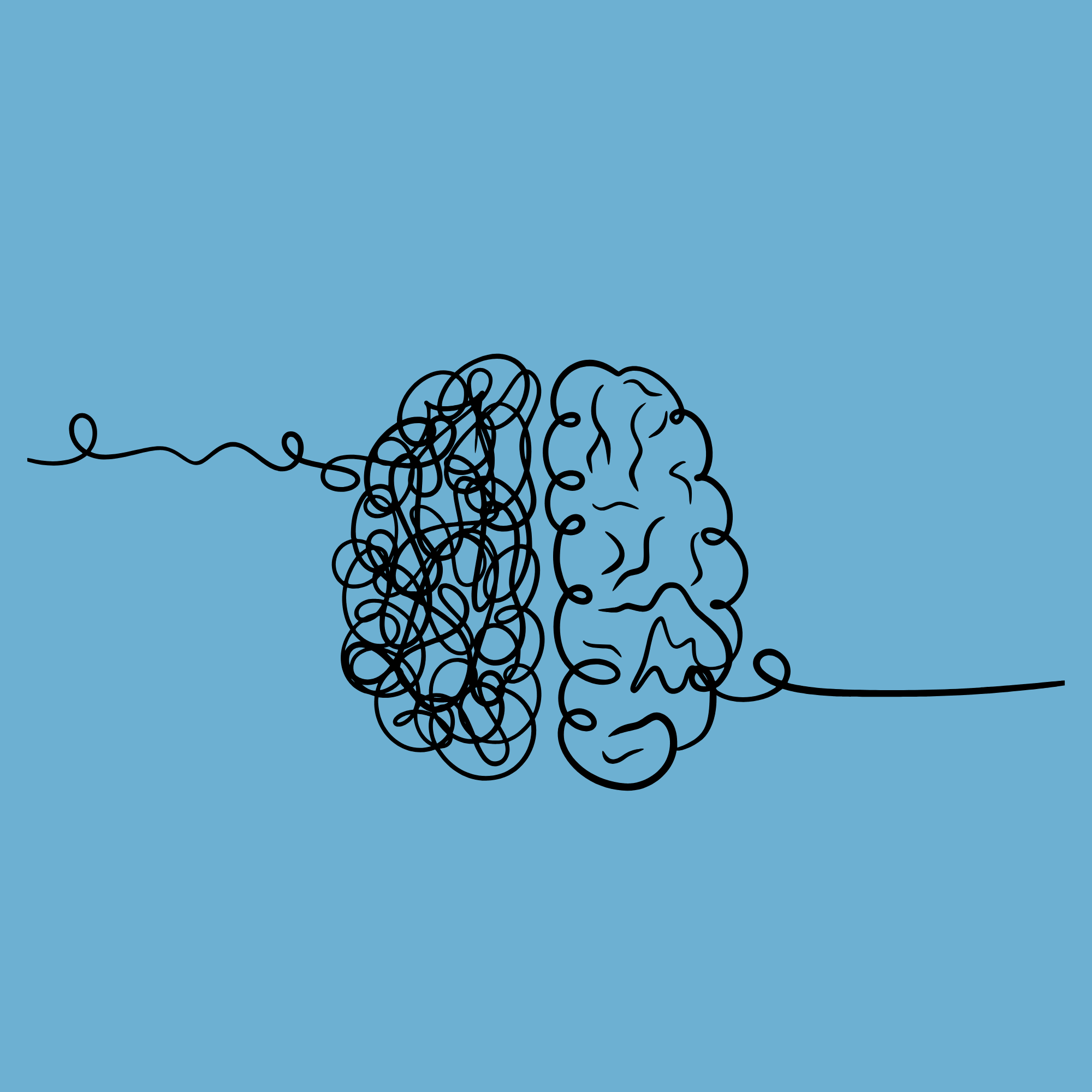
Understanding sensory processing is an important first step—but what comes next is how we respond.
Support doesn’t need to be complicated. Often, small, consistent adjustments—like reducing noise, creating predictable routines, or simplifying tasks—can make a meaningful difference. It’s also about noticing patterns, recognizing when overwhelm is building, and offering support before the system becomes overloaded.
And just as important as strategy is flexibility. What works one day may not work the next.
Because supporting sensory processing isn’t about finding one perfect solution—it’s about adapting in the moment, reducing demand, and making it easier for the brain to keep up.
Under the Hood
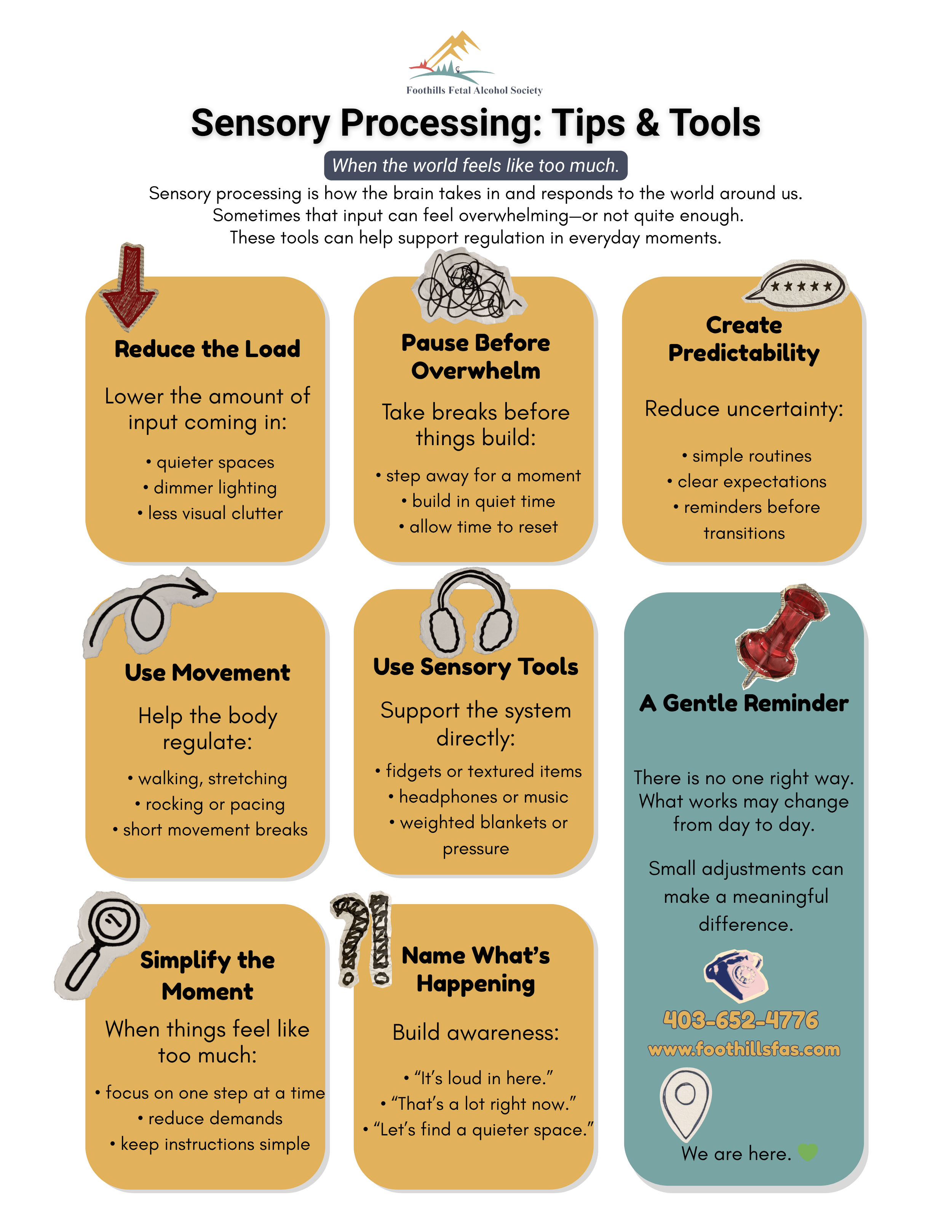
When the world feels like too much—or not quite enough—small adjustments can make a meaningful difference.
This visual guide offers simple, practical ways to support sensory regulation in everyday moments. From reducing input and creating predictability to using movement and sensory tools, these strategies are designed to meet the brain where it is.
Because it’s not about finding one perfect approach—it’s about understanding what’s happening and responding in a way that helps.
What is Sensory Processing
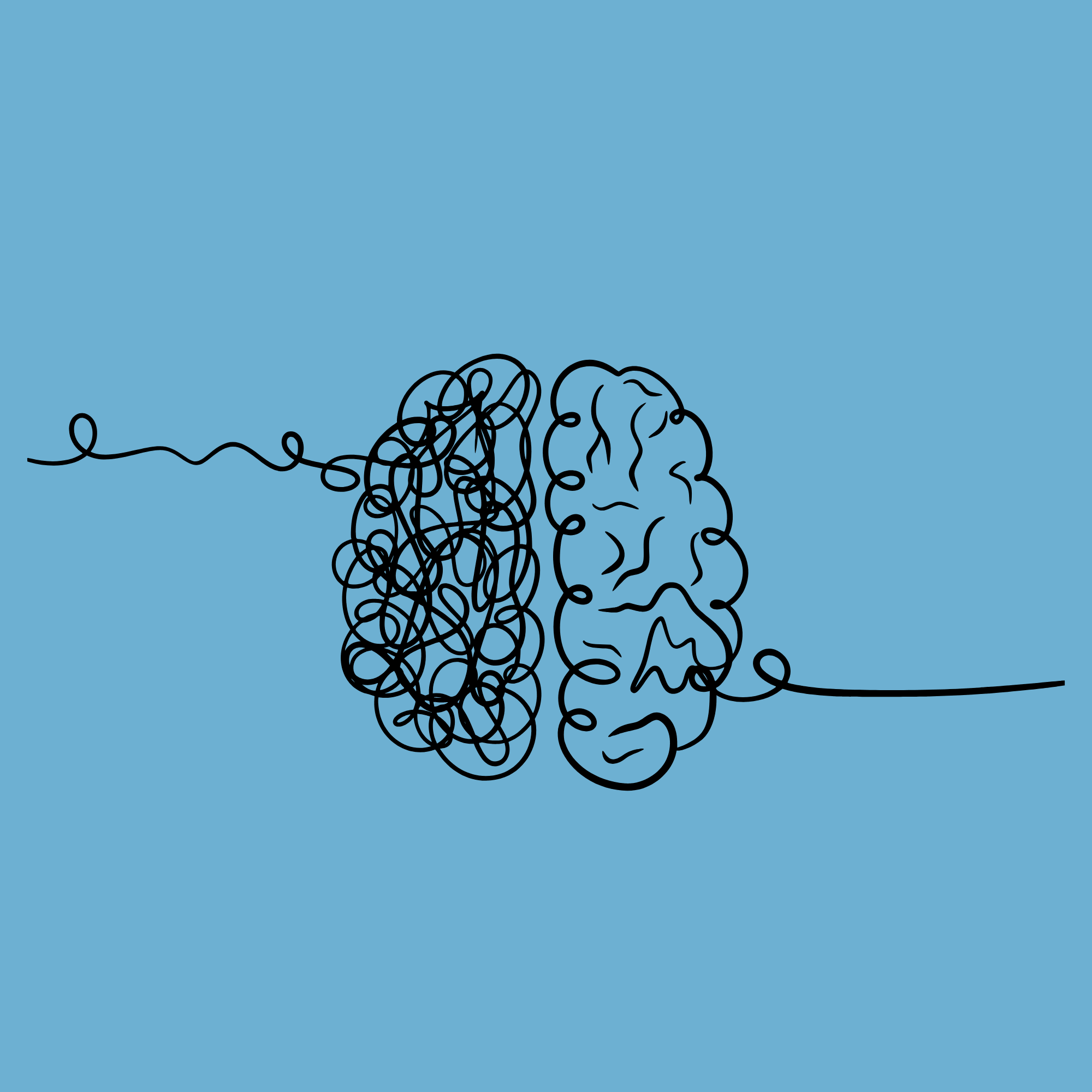
Sensory processing is how the brain makes sense of the world—what we see, hear, feel, and experience moment to moment.
For many people, this happens automatically. The brain filters what isn’t important and helps us focus on what is. But for individuals with FASD, this system can work differently. Sensory input may feel more intense, less predictable, or harder to organize.
This can look like sensitivity to sound, light, or texture—or the need for more movement and stimulation to stay regulated. Often, it’s a mix of both, depending on the moment.
These responses aren’t intentional behaviours—they’re how the brain is processing information.
When we understand that, we begin to shift the question.
Not “What’s wrong?”
But “What is the brain experiencing right now?”
And that’s where more effective, supportive responses begin.

Watching it Happen
Sometimes you can see overwhelm coming before anything has even gone wrong.
The light feels a little too bright. The room is louder than usual. A small shift happens—and you know it’s already a lot. The steps that should be simple start to tangle. Getting ready. Finding things. Staying on track. There’s effort there, even if it doesn’t look like it.
From the outside, it can seem like overreacting or not trying. But underneath, something else is happening—the system is working hard to keep up, and it’s starting to fall behind.
This is the space caregivers often find themselves in: trying to help without adding pressure, trying to say enough—but not too much. And learning, over time, that understanding what’s happening beneath the surface can change how we respond in the moment.
Not perfectly. But often, enough.

Right Now
Some days don’t feel harder for one obvious reason—they feel harder because everything is happening at once.
The light is brighter. The sounds are sharper. The routine that worked yesterday suddenly doesn’t. Tasks don’t line up neatly—they overlap, compete, and interrupt each other. From the outside, it can look like resistance or a sudden reaction. From the inside, it’s something very different.
This is what overwhelm can look like—when the brain is trying to process more than it can comfortably manage, and there’s nowhere for that pressure to go.
When we understand that, we stop asking “why won’t they?” and start asking “what’s happening here?”—and that’s where support begins.

In the Trunk
When too many demands pile up, the brain can feel overwhelmed and unsure where to begin. This article shares a simple strategy—Pause, Pick One, Move—to help make busy moments more manageable for individuals with FASD.

On the Horizon
Bill S-234 proposes a national framework for FASD in Canada, aiming to improve coordination across systems like healthcare, education, justice, and social services that families rely on every day.